About Me
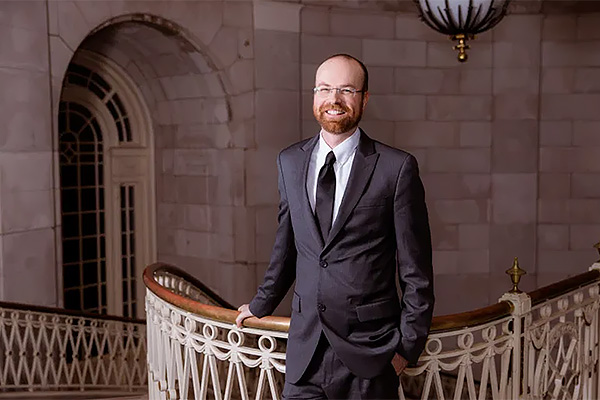
I am an Associate Professor of Political Science at the University of Connecticut, where I also serve as Director of the EcoHouse Learning Community. I received my Ph.D. in political science from the University of California, Riverside in 2012.
My research examines how inequality shapes American politics: who gets represented, which policies follow, and how citizens’ attitudes toward other groups shape their political judgments. My recent work studies democratic attitudes and elections, including how outgroup hostility drives acceptance of election denialism and when voters make decisions in presidential campaigns. With a team of co-authors, I have also studied opinion backlash, showing that opposition to gay rights and immigrant rights is driven more by mobilized elites than by shifts in mass opinion. A longer-running line of research looks at representation, including whether legislators respond to the poor, and at public policy, including how partisan control of government affects wages and the income distribution and how state tax and welfare policy respond to income concentration.
My work appears in the American Journal of Political Science, Political Research Quarterly, Political Behavior, Party Politics, and American Politics Research, among other journals. I am co-author of Elite-led Mobilization and Gay Rights: Dispelling the Myth of Mass Opinion Backlash (University of Michigan Press, 2021). In Spring 2019, I served as Fulbright U.S. Studies Chair at Universidad Veracruzana in Xalapa, Mexico.
Recent Publications
- Benegal, Salil, Thomas J. Hayes, and Antonio Ugues Jr. 2026. "The Politics of Enmity: Outgroup Hostility and Support for the Big Lie." Political Research Quarterly 79: 812–826.
- Lauterbach, Erinn, Thomas J. Hayes, Nick Weller, and Benjamin G. Bishin. 2026. "Working-Class Legislators, Bill Writing, and Introduction: Limited Evidence of Substantive Representation in Congress." Political Research Quarterly 79: 781–795.
- Hayes, Thomas J., and Salil Benegal. 2025. "Late-Deciding Voters in U.S. Presidential Elections." American Politics Research 53 (5): 499–508.